



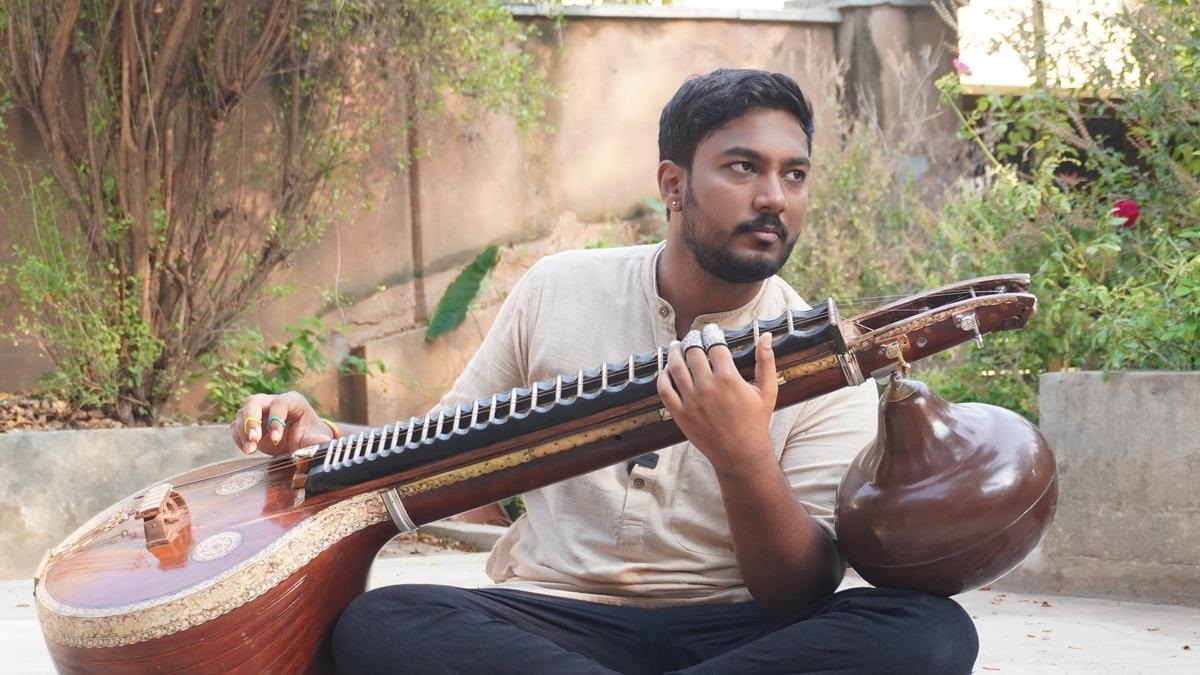
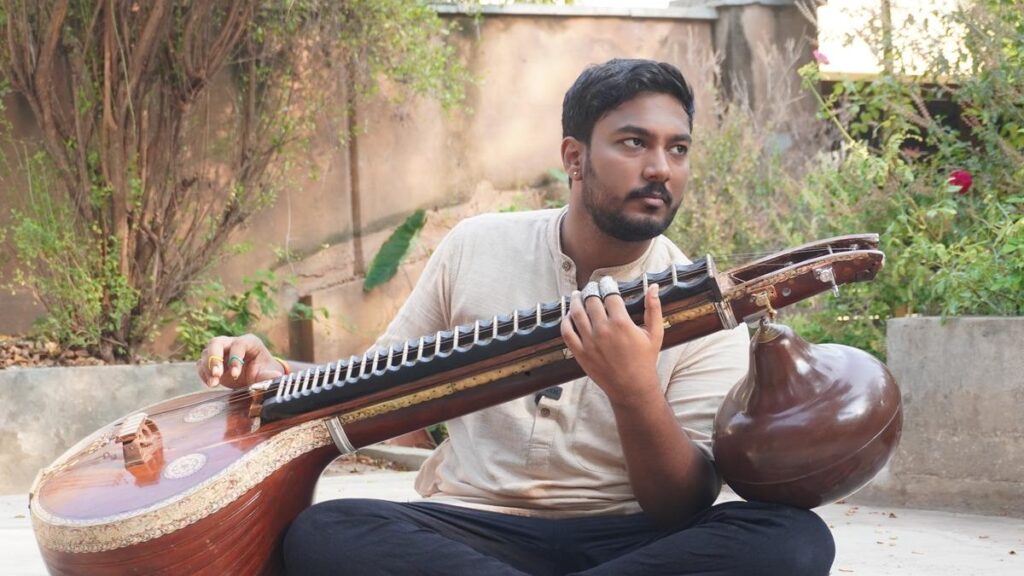
Ramana Balachandran, a 24-year-old Tiruvannamalai-based Carnatic vainika, has captivated the internet with his viral veena interlude in the song “Phir Se” from Ranveer Singh’s blockbuster film, Dhurandhar. [1, 2, 3, 4, 5]
The soulful, bittersweet hook has taken over social media, catapulting the classical prodigy onto the national stage. [1, 2]
The Serendipitous Film Debut
- Instagram Discovery: Music director Shashwat connected with Ramana through a common friend after following his classical performances on Instagram.
- Creative Freedom: Given a brief to capture a “bittersweet” mood, Ramana chanced upon the iconic melody during an organic, random jam session.
- A Distinct Sound: The track’s unique texture was achieved by placing the recording microphone 2.5 feet above the instrument, creating an atmospheric depth new to film tracking. [1, 2, 6]
From Musical Toddler to Classical Virtuoso
- The Turning Point: Raised in Bengaluru by musical parents, Ramana could identify ragas as a toddler. At age nine, he corrected a musical phrase his mother was playing on the veena, prompting his formal enrollment in training.
- Rigorous Training: He studied veena under B. Nagalakshmi, vocal music under Neela Ramgopal, and mridangam under Ranganatha Chakravarthy. He continues to train under his father, Balachandran.
- Breaking Records: Recognised as a prodigy, he was granted special age waivers by Prasar Bharati to secure a direct “A” grade at All India Radio at age 16. The Madras Music Academy similarly waived age rules for his performance.
- Spiritual Shift: His family moved from Bengaluru to Tiruvannamalai, where homeschooling and a spiritually grounded environment deeply shaped his artistic outlook. [7, 8, 9, 10, 11]
Vision Beyond Bollywood
Despite the sudden nationwide fame and a surge in offers from major film composers, Ramana maintains that his priority remains Indian classical music. He views his primary responsibility as exploring the vast expanse of the Carnatic landscape and finding creative ways to make classical art accessible and engaging to modern audiences. [1, 11, 12]
If you would like to explore further, let me know if you want:
- A look into the classical compositions and ragas (like Shanmukhapriya) Ramana frequently explores
- Details on the movie Dhurandhar and its soundtrack team
- A curated list of other classical musicians crossing over into Indian cinema [2, 12]
[2] https://timesofindia.indiatimes.com
[4] https://x.com
[5] https://timesofindia.indiatimes.com
[9] https://sbkk.in
[10] https://20in20.deccanherald.com