



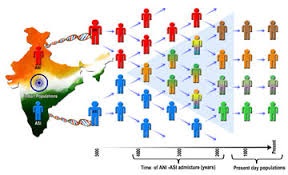

India is home to more than 1.4 billion people, thousands of communities, hundreds of languages, and five major language families. Many communities have historically practised endogamy and in some regions, consanguineous marriage. This is both a social and a biological fact with medical consequences. India is not one genetic population. Indians carry a layered inheritance shaped by ancient migration, mixing, isolation, ecology, language, culture and marriage patterns.
India is not a single genetic population; it is a complex genetic mosaic. Comprising over 1.4 billion people divided into thousands of distinct endogamous communities, the Indian subcontinent possesses an unparalleled degree of genetic diversity. For decades, global genomic databases have been overwhelmingly Eurocentric, leaving the unique genetic landscape of South Asians critically underrepresented.
However, a transformative shift is occurring. Recent breakthroughs from the Department of Biotechnology’s GenomeIndia Project have successfully sequenced thousands of whole genomes from diverse ethnic groups, uncovering over 44 million completely unique genetic variants never before recorded in global science. This deep biological map is laying the foundation for a predictive, affordable, and highly personalized healthcare revolution across the nation.
                [ India's Genetic Architecture ]
                                │
        ┌───────────────────────┴───────────────────────┐
        ▼                                               ▼
 [ Ancestral Layers ]                            [ Social Practices ]
 (Early Humans, Indus Valley,                    (Centuries of Endogamy /
  Steppe, Tibeto-Burman)                          Community-specific Marriage)
        │                                               │
        └───────────────────────┬───────────────────────┘
                                ▼
                    [ Unique Genetic Mosaic ]
                                │
        ┌───────────────────────┼───────────────────────┐
        ▼                       ▼                       ▼
 [ Precision Medicine ] [ Safer Pharmacogenomics ] [ Disease Prevention ]
 (Tailored therapies     (Right drug dosage for   (Early screening for
  for Indian profiles)    specific communities)    thalassemia & cardiac risks)
Understanding the Structure of India’s Mosaic
The Indian genome is a beautifully layered historical tapestry. It is anchored by ancient ancestral components, including early modern humans, populations linked to the Iranian plateau, Indus Valley communities, Steppe pastoralists, and Tibeto-Burman groups.
What makes India genetically unique, however, is its long history of endogamy—the cultural practice of marrying within specific social, linguistic, or geographic groups. For centuries, thousands of distinct sub-populations lived adjacent to one another but remained biologically isolated. This lack of genetic mixing has led to an accumulation of distinct, population-specific mutations. While some of these variations provide unique natural immunities, others amplify the prevalence of rare, inherited, and complex diseases within specific communities.
From Genetic Maps to Better Medicine
Decoding these variants directly influences the quality, safety, and efficacy of everyday medical interventions.
1. Preventing Adverse Drug Reactions (Pharmacogenomics)
Pharmaceutical dosages have historically been standardized based on clinical trials conducted in Western nations. However, genes dictate how effectively a person’s liver metabolizes medication.
- The Anesthesia Hazard: Findings from the GenomeIndia Consortium revealed that specific genetic mutations prevalent in certain communities, such as the Vaishya community of South India, cause a severe deficiency in enzymes needed to process standard anesthetics, turning routine surgical procedures potentially fatal.
- Cardiovascular & Antiviral Drugs: Millions of Indians carry variants that either dramatically slow down or accelerate drug clearance. By screening a patient’s genetic profile beforehand, doctors can practice precision prescribing—ensuring the right drug and the correct dose are delivered on the first attempt, preventing toxic overdoses or ineffective under-treatments.
2. Redefining Chronic and Complex Disease Risks
Complex conditions like Type-2 diabetes, coronary artery disease, and chronic kidney issues have massive multi-genetic footprints.
Currently, doctors rely on international “genetic risk scores” to predict a patient’s likelihood of suffering a heart attack. Because these metrics are derived from European datasets, they consistently fail or miscalculate risks when applied to an Indian context. Building an Indian-specific genomic reference database allows healthcare networks to build localized predictive tools. Individuals carrying high-risk Indian-specific variants can be flagged for aggressive lifestyle interventions decades before clinical symptoms appear.
3. Eradicating Rare and Inherited Disorders
Due to community-specific founder effects, India carries a heavy burden of rare genetic diseases and hemoglobin disorders like Thalassemia and Sickle Cell Anemia.
- Pre-Marital and Carrier Screening: Affordable, targeted genetic screening panels allow couples from high-risk lineages to understand their reproductive risks voluntarily and confidentially before conceiving.
- Advanced Newborn Diagnostics: Instead of waiting for a rare developmental disorder to manifest debilitating symptoms, newborn genetic screening identifies treatable, metabolic anomalies immediately at birth, saving families years of exhausting diagnostic delays.
The Architecture of India’s Genomics Revolution
To translate DNA data into public health policies, India has built a robust, state-of-the-art national research framework:
| Project / Platform | Institutional Framework | Primary Health Function |
|---|---|---|
| GenomeIndia Project | Funded by DBT; Led by Indian Institute of Science (IISc), Bengaluru | Sequenced 10,000 reference genomes; identified 180 million population variants. |
| Indian Biological Data Centre (IBDC) | National Repository, Faridabad | Securely stores over 8 petabytes of digital genomic data as a public health good. |
| Phenome India Biobank | CSIR-Institute of Genomics and Integrative Biology (IGIB), New Delhi | Connects genetic datasets with physical traits, imaging, and long-term health outcomes. |
| UMMID Initiative | Department of Biotechnology (DBT) | Establishes genetic diagnostic clinics and counseling centers in government hospitals. |
Ethical Boundaries: Reading the Mosaic Responsibly
While genomics offers a powerful frontier for preventive medicine, it presents profound ethical, social, and logistical challenges that require stringent governance.
- The Crucial Role of Counseling: Genetic data can easily be misunderstood. For instance, being a “carrier” for a disease is entirely common and harmless to the individual. Without accessible, empathetic genetic counseling, laboratory reports can cause unnecessary panic, leading to broken marriage alliances or the unfair stigmatization of mothers and entire communities.
- Preventing Biological Stigma: It is clinically vital to recognize that genetic diversity is a medical tool, not a tool for social stratification. The data must never be weaponized to make pseudoscientific claims regarding community purity, superiority, or social ranking.
- Data Security & Inclusivity: As data flows into central repositories like the IBDC, strict digital infrastructure must safeguard patient privacy against commercial exploitation. Furthermore, genome-driven medicine must not become an elite luxury; diagnostic chips must be mass-produced affordably to reach rural health centers across India.
Conclusion
Understanding India’s genetic mosaic shifts the paradigm of medicine from reactive treatment to proactive prevention. By embracing our distinct biological architecture, Indian medical science is moving away from a one-size-fits-all model toward precision healthcare tailored to our specific demographic realities. The ongoing mapping of the Indian genome is far more than a study of our historical origins; it is the ultimate medical blueprint for a healthier, more resilient future.
If you would like to explore this topic further, let me know if I should:
- Outline the exact biology of how endogamy accentuates genetic variations.
- Provide a list of common genetic tests currently available in Indian hospitals.
- Break down how AI and machine learning are being used to analyze India’s 8-petabyte biobank.
10 sites
- India’s genetic mosaic: how understanding our genes can …13 May 2026 — Our genetic tapestry is not merely an ancestry story, but a medical map. It can help prevent inherited diseases, improve newborn s…
The Hindu
- India’s genetic mosaic: how understanding our genes can help …13 May 2026 — Our genetic tapestry is not merely an ancestry story, but a medical map. It can help prevent inherited diseases, improve newborn s…
The Hindu
- Genome India Project – Gokulam Seek IAS Academy7 Mar 2024 — Advancing Genetics: Human Genome Sequencing has revolutionized genetics by providing a comprehensive map of genetic information in…
Gokulam Seek IAS Academy